Vision & Outcomes: How to Replace Fragile Goals with Results That Scale
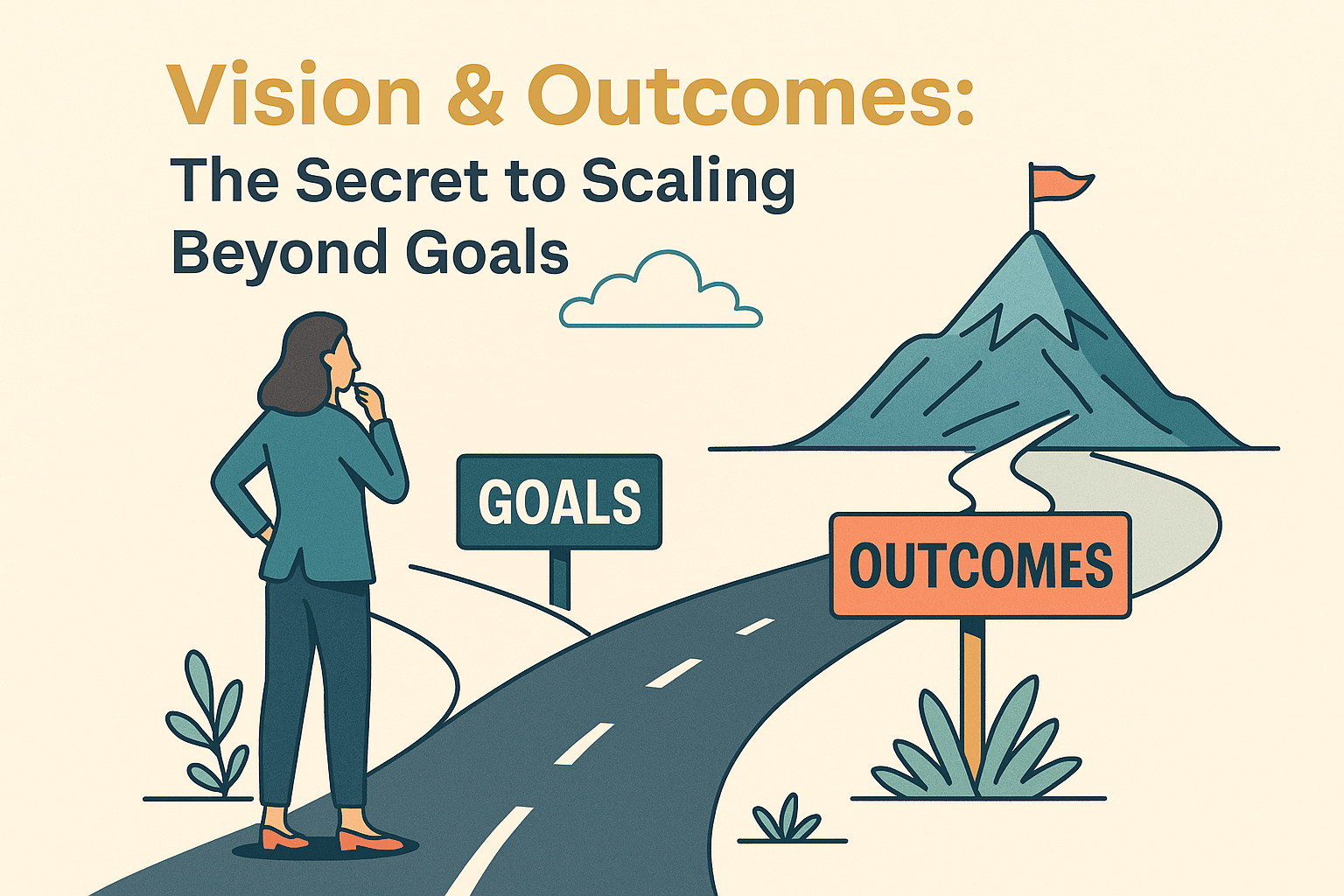
Vision & Outcomes: The Secret to Scaling Beyond Goals
By Alison A Stewart | XponentialMentor.com
For Women Rising, Elders Returning,
and Entrepreneurs Who Lead
Why Most Goals Fail
If you’ve ever set a goal, you know the pattern: excitement, a burst of action, then… drift.
It’s not because you’re lazy, unfocused, or undisciplined. It’s because goals, by themselves, are fragile.
• They lack clarity.
• They’re often disconnected from the “why” behind them.
• They don’t tell you what success actually looks like.
That’s why high performers don’t obsess over goals—they obsess over outcomes.
The Difference Between Goals and Outcomes
• Goals are what you wish for.
• Outcomes are what you create.
Here’s the contrast:
• Goal: “Improve customer experience.”
• Outcome: “By the end of Q4, achieve a customer satisfaction score of 9/10 with at least 100 new reviews.”
• Goal: “Grow revenue.”
• Outcome: “Close $2M in new contracts by December 31, with a 25% profit margin.”
The difference is clarity. The outcome defines exactly what success looks like and when it must happen.
Why Outcomes Scale Business Faster
When you focus on outcomes:
• You create alignment. Your team knows exactly what winning looks like.
• You eliminate excuses. There’s no wiggle room in outcomes—only action.
• You build momentum. Every small win toward the outcome compounds.
Outcomes are the fuel for scaling, because they give you a true north that keeps the organization moving even when things get messy.
How to Apply This Right Now
Here’s your 3-step exercise for Week 2:
List your top 3 goals for this quarter.
o Be honest. They might sound vague like “grow the business” or “hire better people.”
Rewrite each one as an outcome.
o Add specifics: numbers, deadlines, and clarity.
o Example: Instead of “hire better people,” → “Hire 3 senior account managers by December 15 with proven track records.”
Identify the first immediate step.
o Ask: What can I do this week to move closer to this outcome?
o Example: If the outcome is 500 leads, the first step might be launching a test campaign or refining a lead magnet.
Looking Ahead
Defining outcomes is step two in our 12-week journey. Next week, we’ll explore Dyads—a communication tool that creates accountability, unlocks insights, and accelerates growth.
When you combine facts (Week 1) with clear outcomes (Week 2), you build a foundation that makes scaling inevitable.
Remember: Goals fade. Outcomes compound.
Let’s define outcomes that create momentum.
Building a New Model for Relational Wealth
At Xponential Mentor, we believe:
Truth builds trust.
Energy leads.
Alignment is more powerful than hustle.
🔗 Visit us at XponentialMentor.com
🎥 Watch our companion video on YouTube: “Wealth Is Relational”
You don’t have to do this alone.
Let’s walk it together.
With love,
Hunter & Alison